




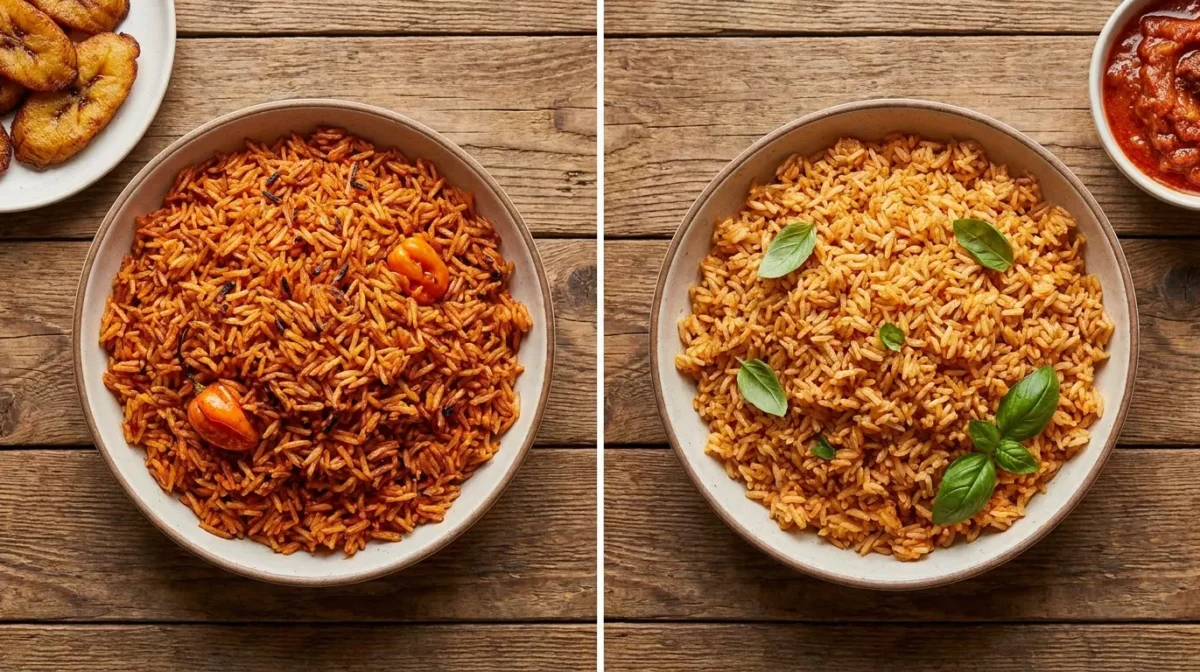
Nigerian Jollof Rice vs Ghanaian Jollof: What’s Actually the Difference?
Meta Title: Nigerian Jollof Rice vs Ghanaian Jollof: What’s Actually the Difference? Meta Description: Nigerian jollof or Ghanaian jollof, which is really better? Explore the real differences, the smoky secret, and where to order authentic Nigerian jollof in Toronto.
Few topics start as much friendly (and not-so-friendly) debate across West Africa as the “Jollof Wars.” Nigerians and Ghanaians have been arguing for years over whose jollof rice reigns supreme. But beyond the banter, there are real differences in ingredients, technique, and flavor. Let’s settle what’s fact and what’s just food pride.
What Is Jollof Rice, Really?
Jollof rice is a one-pot West African rice dish cooked in a base of tomatoes, peppers, onions, and spices, giving it its signature deep red-orange color. It’s believed to have originated with the Wolof people of Senegal and Gambia centuries ago, and from there it spread and evolved across the region, with Nigeria, Ghana, Senegal, and others all developing their own distinct versions over time.
Nigerian Jollof vs Ghanaian Jollof – What’s the Real Difference?
The biggest differences come down to rice type and spice profile. Nigerian jollof typically uses long-grain parboiled rice, which holds its shape and soaks up flavor without turning mushy. Ghanaian jollof often uses fragrant jasmine rice, giving it a softer texture and a slightly different aroma. Nigerian jollof also tends to lean heavier on scotch bonnet peppers and a deeper tomato base, while Ghanaian versions often bring in more herbs, like basil, for a distinctly aromatic profile. Neither is “wrong”, they’re just built from different regional pantries and traditions.
Why Does Nigerian Jollof Taste Smoky?
That smoky flavor, known as the “party jollof” taste, comes from cooking the rice in a large pot over an open flame or firewood, allowing the bottom layer to slightly char. This isn’t a mistake; it’s an intentional, prized part of the dish. Home cooks trying to recreate it often use a very hot pan and let the rice sit undisturbed for the last few minutes of cooking to develop that same smoky base layer.
What Rice Should You Use for Authentic Jollof?
For Nigerian-style jollof, parboiled long-grain rice is the gold standard. It’s sturdier than regular white rice, absorbs the tomato-pepper stock evenly, and is far more forgiving if you’re new to cooking jollof; it resists turning into mush even if you’re a little generous with the liquid.
How to Make Party Jollof at Home (Step-by-Step)
- Blend tomatoes, red bell peppers, scotch bonnet, and onion into a smooth base.
- Fry the blend in oil with tomato paste until it darkens and the raw taste cooks out.
- Add stock, seasoning cubes, curry powder, thyme, and bay leaves.
- Stir in parboiled rice and enough liquid to just cover it.
- Cover and cook on low heat, letting the rice steam rather than boil.
- In the last few minutes, raise the heat slightly to create that signature smoky base layer.
What Do You Eat With Jollof Rice?
Jollof rice is rarely served alone. It’s classically paired with fried or grilled protein and a side of sweet fried plantain to balance the heat and smokiness. For something with extra depth, our smoky Asun Jollof brings peppered goat meat right into the mix.
Where to Get Authentic Nigerian Jollof Rice in Toronto/Markham
If you’d rather skip the pot-watching and get it right the first time, order our classic jollof rice made the traditional smoky way. Browse our full rice dishes menu for more options, or if you’re planning a wedding, birthday, or get-together, book jollof for your party and let us handle the pot for you.


